Meenakshi Amman Temple Kumbabishekam on September 17, 2026 — Official Date Confirmed
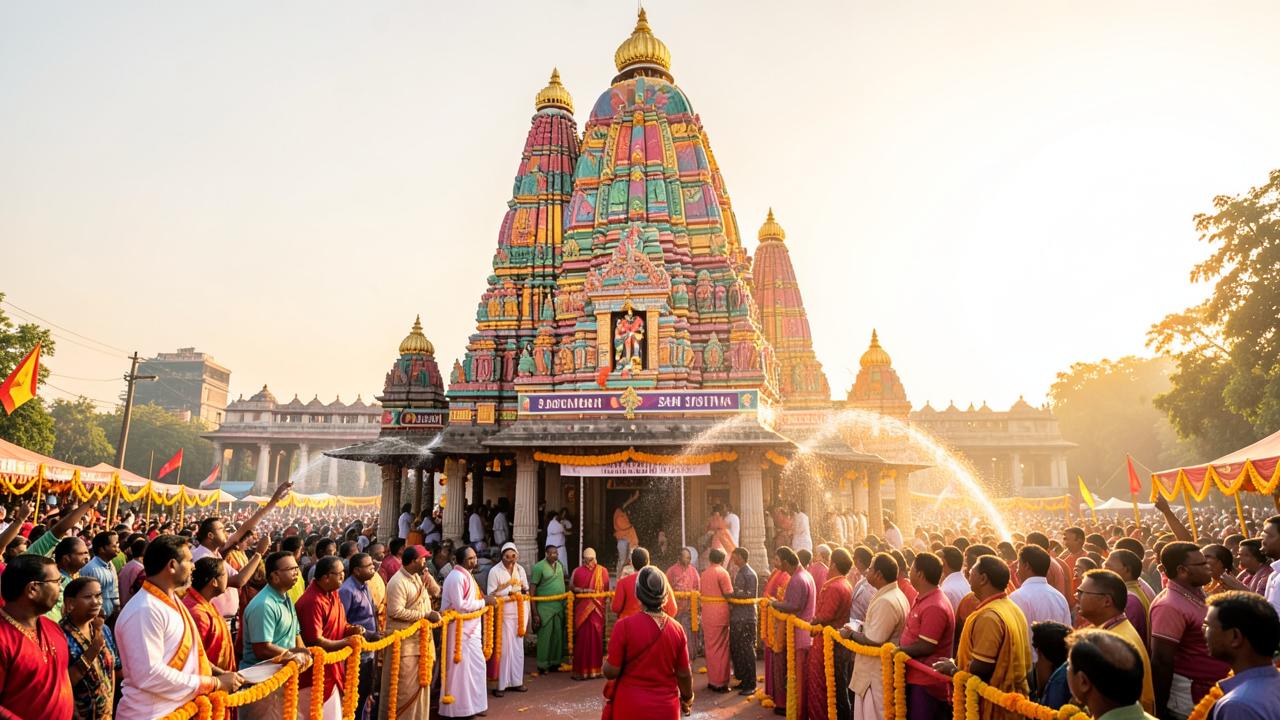
After 17 years of waiting, renovation, and anticipation that has stretched across multiple governments and a devastating fire — the Kumbabishekam of the Madurai Meenakshi Amman Temple is finally here.
🗓️ The date is confirmed: September 17, 2026. The Maha Kumbabishekam takes place on the 31st day of the Tamil month of Avani, with the consecration ritual scheduled between 7:40 AM and 8:10 AM.
For Madurai, this is not just a temple event. It is a once-in-a-generation spiritual renewal — a moment the city has been building toward since the last Kumbabishekam was performed in April 2009. For devotees across Tamil Nadu, India, and the Tamil diaspora worldwide, September 17 is the day the goddess receives her temple anew.
This guide covers everything: what the Kumbabishekam means, what happens today, the detailed ritual schedule, how authorities are managing the extraordinary crowds expected, and what you need to know if you are attending or watching from home. For the background on how the date was finalized, see our earlier report on the Kumbabishekam date announcement.
What Is a Kumbabishekam? Understanding the Sacred Ceremony
Before the logistics and the schedule, the meaning.
Kumbabishekam (also written as Kumbabhishekam or Kudamuzhukku) is the consecration ceremony that spiritually activates or re-activates a Hindu temple after construction or major renovation. The word combines kumbha (sacred pot) and abishekam (ritual anointing) — describing the central act of the ceremony, in which water sanctified through elaborate Vedic rituals is poured over the kalasams (the sacred finials crowning the temple towers and sanctum) to restore and renew their divine energy.
In the Hindu Agamic tradition, temples are understood as living bodies — not merely buildings. The presiding deity inhabits the structure through the divine energy (shakti) consecrated into the stone and metal of the sanctum. Over time — and especially after physical damage — that energy requires renewal through precisely performed rituals conducted by qualified priests (sthapathis and archakas) following the ancient Agama Shastra guidelines.
A Kumbabishekam is therefore not a celebration in the ordinary sense. It is a restoration — a re-breathing of divine life into the sacred space. For devotees, witnessing or even knowing that a Kumbabishekam has occurred at their temple is considered enormously meritorious, as the renewed divine energy is believed to radiate its blessings outward to all living beings in the surrounding region.
⏳ The traditional interval: By Agamic convention, Kumbabishekam should ideally be performed once every 12 years. The last ceremony at the Meenakshi Amman Temple was held in April 2009. Seventeen years — not twelve — have elapsed, making today's ceremony all the more significant and all the more awaited.
Why Did It Take 17 Years? The Story Behind the Long Wait
The journey to today's Kumbabishekam is a story of calamity, delay, persistence, and ultimately, completion.
The 2018 Fire That Changed Everything
The Meenakshi Amman Temple should have had its Kumbabishekam in 2021, twelve years after the 2009 ceremony. That timeline was shattered on February 2, 2018, when a devastating fire broke out in the Veeravasantharaya Mandapam — the grand pillared hall located within the temple's eastern tower complex.
The fire caused severe structural damage to one of the temple's most historically significant mandapams. The restoration was not a simple repair — it required the sourcing of 79 carved black granite pillars, each 15 feet in length, matching the original Dravidian craftsmanship of the existing structure. Finding appropriate stone, quarrying it, transporting it, and having it sculpted to the required Agamic specifications was a project that would consume years.
Delays Compound: Covid, Stone Shortages, Political Transitions
The Kumbabishekam preparations that were finally initiated under one government stalled repeatedly. The COVID-19 pandemic and its associated lockdowns from 2020 onward halted construction activity. Shortages of the right quality of stone from Namakkal — the primary source for the granite pillars — caused further delays. Political transitions brought new ministerial oversight and fresh reviews of the scope of work.
Through these years, devotees and temple protection organizations maintained pressure for the ceremony to proceed only after the full and authentic restoration of the damaged Veeravasantharaya Mandapam — not before. We tracked these works in our ongoing renovation update.
The Final Push: ₹32 Crore, 186 Renovation Works, September 17
The DMK government under Chief Minister M.K. Stalin committed to completing the Kumbabishekam and allocated the resources to make it happen. A total of ₹32.28 crore was deployed across all renovation and preparation works:
- ₹15.81 crore from the temple's own funds
- ₹5.16 crore from donor (ubayadarar) contributions
- An additional ₹21 crore raised from donors specifically for the thirupani (renovation) and yagasalai puja works
A total of 186 renovation projects were undertaken and completed across the temple complex. Renovation of the temple's gopurams, mandapams, prakarams, and sanctum structures was completed by September 10 — one week before today's ceremony — as confirmed by the Tamil Nadu government to the Madurai Bench of the Madras High Court.
The wait has been 17 years. The preparation has been thorough. And today, September 17, 2026, the Kumbabishekam happens.
Official Ritual Schedule: What Happens Today, September 17
The preparations for today's ceremony have been underway since September 6. Here is the complete sequence of rituals, culminating in this morning's consecration:
Pre-Kumbabishekam Ritual Sequence (September 6–16)
The Kumbabishekam Itself: September 17, 2026
The entire Kumbabishekam ritual window is thus 30 minutes — from 7:40 AM to 8:10 AM — with each of the three major consecrations separated by approximately 15 minutes.
Arrangements for Devotees: What to Expect Today
Given the once-in-17-years significance of today's event, the Tamil Nadu government convened an inter-departmental review meeting chaired by Energy Resources, Electricity, and Law Minister R. Nirmal Kumar in August 2026. Officials from the district administration, city corporation, police department, Tamil Nadu Electricity Board, and the HR&CE Department coordinated comprehensive arrangements.
Crowd Management and Civic Facilities
The scale of the anticipated crowd — the Meenakshi Amman Temple's Kumbabishekam is expected to draw devotees in the hundreds of thousands — has prompted comprehensive civic arrangements:
Arrangements for at least 8,000 vehicles across designated parking zones
Temporary toilet facilities installed across multiple points around the temple complex
Distribution points established at crowd congregation areas
Extensive camera coverage of the temple area and surrounding streets for security coordination
Audits of surrounding residential buildings to prevent unsafe rooftop gatherings
Detailed exit route planning and street zoning finalized by the district administration and police
Local Holiday
A two-day local holiday has been declared for Madurai to allow residents and pilgrims to participate in the Kumbabishekam. Educational institutions, government offices, and many businesses in Madurai will remain closed.
The Significance of Today for Madurai and Tamil Devotees
There is a belief, widely held in Madurai and across Tamil Nadu, that the divine grace bestowed during a Kumbabishekam extends outward — not only to those physically present at the temple but to all living beings in the surrounding region. This is not metaphor; it is a living article of faith for millions of devotees.
In that sense, today's Kumbabishekam at the Meenakshi Amman Temple is understood as a moment of universal blessing — Goddess Meenakshi's renewed presence radiating from her freshly consecrated temple across Madurai and beyond.
For Tamil Hindus, the Meenakshi Amman Temple is not merely an important shrine. It is the theological and cultural centre of Tamil spiritual life in a way that very few temples anywhere in the world can claim. The temple's 2,500-year history, its 14 towering gopurams covered in thousands of painted sculptures, its Golden Lotus Tank, its Thousand-Pillared Hall — all of this is not heritage in the museum sense. It is a living, breathing, actively worshipped sacred complex. Explore its design in our temple architecture guide.
When that complex receives its Kumbabishekam — when the goddess is, in the Agamic understanding, freshly and completely enshrined — the whole of Tamil religious culture feels it.
For Those Visiting Madurai Today and in the Coming Days
If you are in Madurai for today's Kumbabishekam or arriving in the days immediately following, here is the essential practical information:
Post-Kumbabishekam: What Changes at the Temple
After today's consecration, the Meenakshi Amman Temple re-enters its full ritual life with renewed energy. For visitors planning trips in the coming weeks and months:
- The temple's six daily poojas resume in their regular sequence
- The Veeravasantharaya Mandapam — restored after the 2018 fire — is now complete and open to devotees for the first time since the damage
- Post-Kumbabishekam darshan in the weeks immediately following the ceremony is considered highly auspicious; devotees specifically plan visits in this period to receive the freshly renewed blessings
The regular Meenakshi Amman Temple timings apply from tomorrow: 5:00 AM to 12:30 PM and 4:00 PM to 10:00 PM. For visit planning, darshan timings, and how to reach Madurai, see our complete Madurai travel guide and where to stay near the temple.
Frequently Asked Questions
What is the Kumbabishekam date of Meenakshi Amman Temple in 2026?
The Kumbabishekam of Meenakshi Amman Temple, Madurai is officially confirmed for September 17, 2026 (the 31st day of the Tamil month of Avani). The ritual is scheduled between 7:40 AM and 8:10 AM, with the main Kumbabishekam of the golden vimanas at 7:40 AM, the Amman Moolasthanam at 7:55 AM, and the Sundareswarar Moolasthanam at 8:10 AM.
When was the last Kumbabishekam at Meenakshi Amman Temple?
The previous Kumbabishekam at the Meenakshi Amman Temple was held in April 2009. By tradition, the ceremony should have been repeated in 2021 — 12 years later — but was significantly delayed due to a devastating fire in the Veeravasantharaya Mandapam in February 2018, which necessitated extensive restoration works before the consecration could proceed.
Why was the Meenakshi Amman Temple Kumbabishekam delayed?
The primary cause of delay was the fire on February 2, 2018 that severely damaged the Veeravasantharaya Mandapam. Restoring this mandapam required 79 specially carved black granite pillars, each 15 feet long, which took years to source, sculpt, and install. Additional delays were caused by the COVID-19 pandemic, stone shortages, and renovation scope reviews. The total renovation investment reached ₹32.28 crore across 186 works, completed by September 10, 2026.
How many devotees are expected at the 2026 Kumbabishekam?
Lakhs of devotees are expected to attend in person, with authorities making arrangements for at least 8,000 vehicles. Access to the temple terrace during the ritual is restricted to holders of holographic QR-coded entry passes (8,000–10,000 capacity). Large LED screens at public locations and official digital live-streaming will allow the far larger number of devotees unable to enter the complex to witness the ceremony.
Can I watch the Meenakshi Amman Temple Kumbabishekam online?
Yes. The Tamil Nadu government and temple trust are providing live-streaming of the Kumbabishekam through official digital platforms, making the ceremony accessible to Tamil devotees worldwide. Multiple LED screens have also been set up at key public locations across Madurai.
Will there be a local holiday in Madurai for the Kumbabishekam?
Yes. A two-day local holiday has been declared in Madurai for the Kumbabishekam event, allowing residents, devotees, and pilgrims to participate in the ceremony and festivities without work or school obligations.
What is the significance of Kumbabishekam?
Kumbabishekam is a Vedic-Agamic consecration ceremony in which water sanctified through elaborate rituals is poured over the sacred kalasams (finials) of a temple's towers and sanctums, spiritually renewing the divine energy enshrined within. After renovation or damage, Kumbabishekam restores the full spiritual potency of the deity's abode. The blessings of a freshly consecrated temple are believed to radiate outward to all living beings in the surrounding region.
A Temple Renewed, A City Transformed
There are moments in a city's life that become part of its permanent story — events that the city will describe to itself for decades afterward, the way it marks time and meaning.
September 17, 2026 is one of those moments for Madurai.
The Meenakshi Amman Temple's Kumbabishekam is not happening in spite of the 17-year wait — it is happening because of everything those years contained: the fire that forced a full restoration, the painstaking sourcing of 79 granite pillars, the political will to see the work through, the patient devotion of lakhs of pilgrims who waited and kept faith with their goddess.
The fresh consecration water pouring over the golden vimanas of the Meenakshi and Sundareswarar sanctums this morning is not just ritual. It is Madurai saying: we restored what was broken, we honoured what was sacred, we are ready to begin again.
🙏 Planning a visit to the Meenakshi Amman Temple after the Kumbabishekam? Explore our complete guides: temples to visit in Madurai, Madurai city attractions, the food guide, and how to reach Madurai and where to stay.